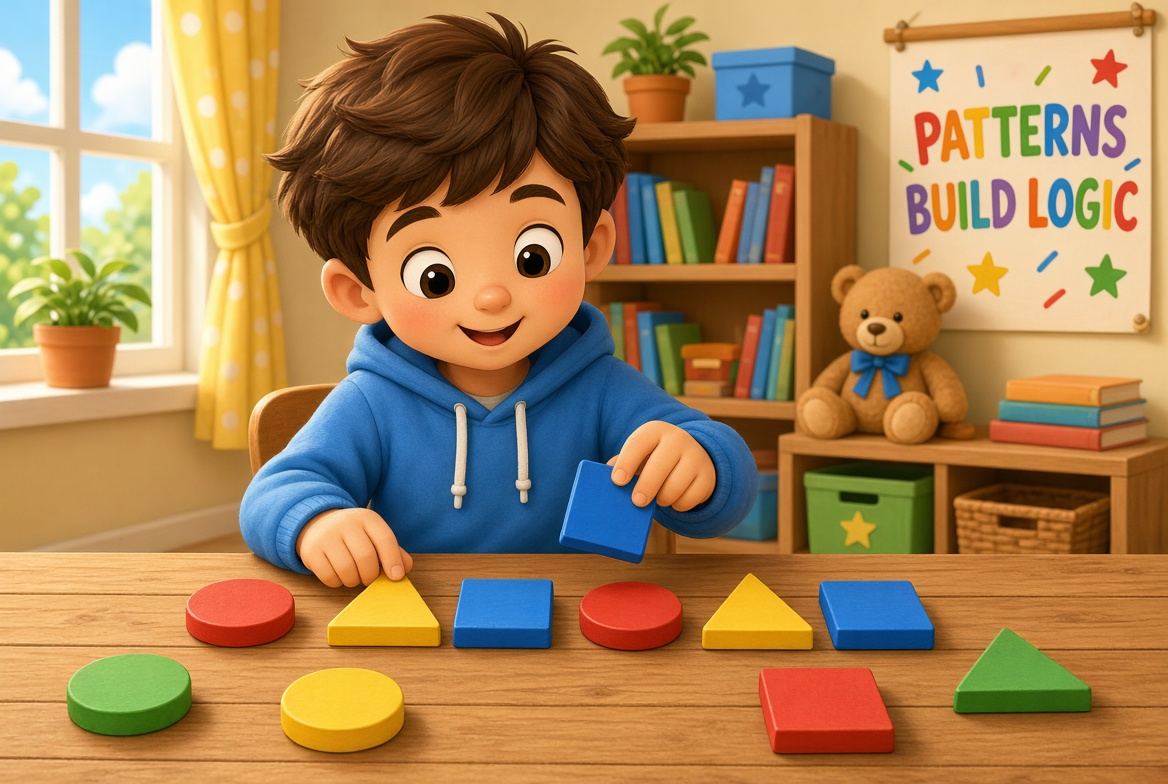
What is a pattern?
A pattern is something that repeats or follows a rule. Children can discover patterns in colours, shapes, sounds, movements, and everyday objects.
Try red, blue, red, blue blocks, or clap, tap, clap, tap. Ask your child what they notice before asking what comes next.
How patterns support learning
Pattern activities give children opportunities to compare objects, notice differences, make predictions, and explain their ideas. These are useful foundations for reasoning and problem-solving.
There is no need to turn every activity into a lesson. Curiosity and conversation matter more than speed.
- Noticing what is the same or different.
- Predicting what might come next.
- Describing a repeating rule in their own words.
- Trying another approach when a pattern changes.
Five activities to try at home
Toy parade: arrange toy cars in two colours and invite your child to continue the sequence.
Clap and tap: make a simple movement pattern and take turns being the leader.
Nature walk: notice repeating leaves, fence posts, or paving stones.
Pattern picture: make a repeating border with crayons or paper shapes.
Be the puzzle maker: let your child invent a pattern for you to solve.
What if your child finds it difficult?
Shorten the pattern, use objects your child can move, and offer two choices for the next item. Explain the pattern together if needed.
Children learn at different rates. Keep activities relaxed and stop when your child loses interest.
Keep learning through play
Continue practising patterns with playful learning activities.
Explore Pattern Park