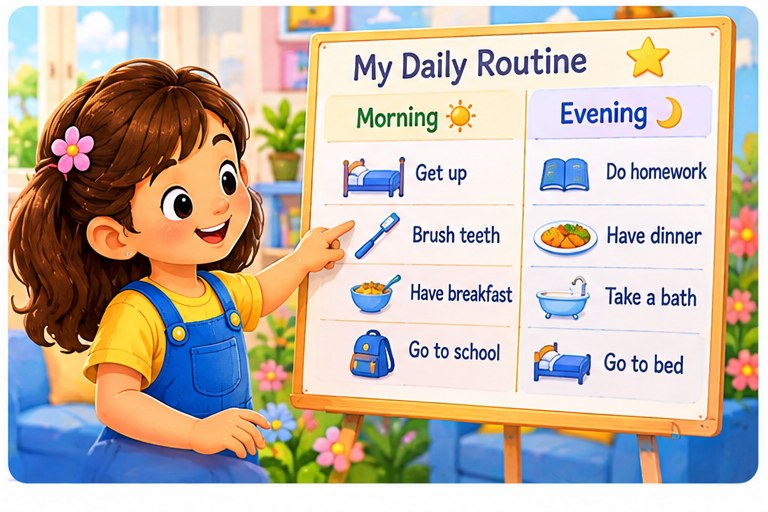
Why routines support learning
Predictable routines help children feel secure and understand what happens next in their day.
Talking about the order of events supports sequencing, an early skill for storytelling, mathematics, and logic.
Talk through the day
Morning: “First we brush our teeth, then we get dressed, then we eat breakfast.”
Mealtime: “We wash our hands, sit at the table, eat, and then clear our plates.”
Bedtime: “We put on pyjamas, brush teeth, read a story, and turn out the light.”
Three sequencing activities
- Photo story: take three photos of a routine step and ask your child to put them in order.
- Story stones: draw simple pictures on stones or cards and arrange them to tell a short story.
- Recipe steps: follow a simple recipe together and talk about what comes first, next, and last.
Questions that encourage sequencing
- What do we do first?
- What happens after that?
- What is the last thing we do?
- What would happen if we did it backwards?
Keep it natural
You do not need a special activity every day. Noticing and naming the order of ordinary moments is enough.
If your child is not interested, try again another time. Repetition over weeks matters more than one long session.